Thai People Still Aim to Buy Homes in the Next Year Despite Challenging Economic Conditions, Hope for Strong Government Measures to Revive the Real Estate Market
Although the government has expanded economic stimulus measures through state agencies, it has not been sufficient to quickly restore consumer confidence as expected. A survey of consumer confidence index in August 2024 by the Economic and Business Forecasting Center at the University of the Thai Chamber of Commerce found that the consumer confidence index has continuously declined for six months and is at its lowest level in 13 months since August 2023. This is due to consumer concerns about the ongoing slowdown in the Thai economy and its slow recovery, which has impacted the growth of many businesses, including the real estate market, which has also slowed down.
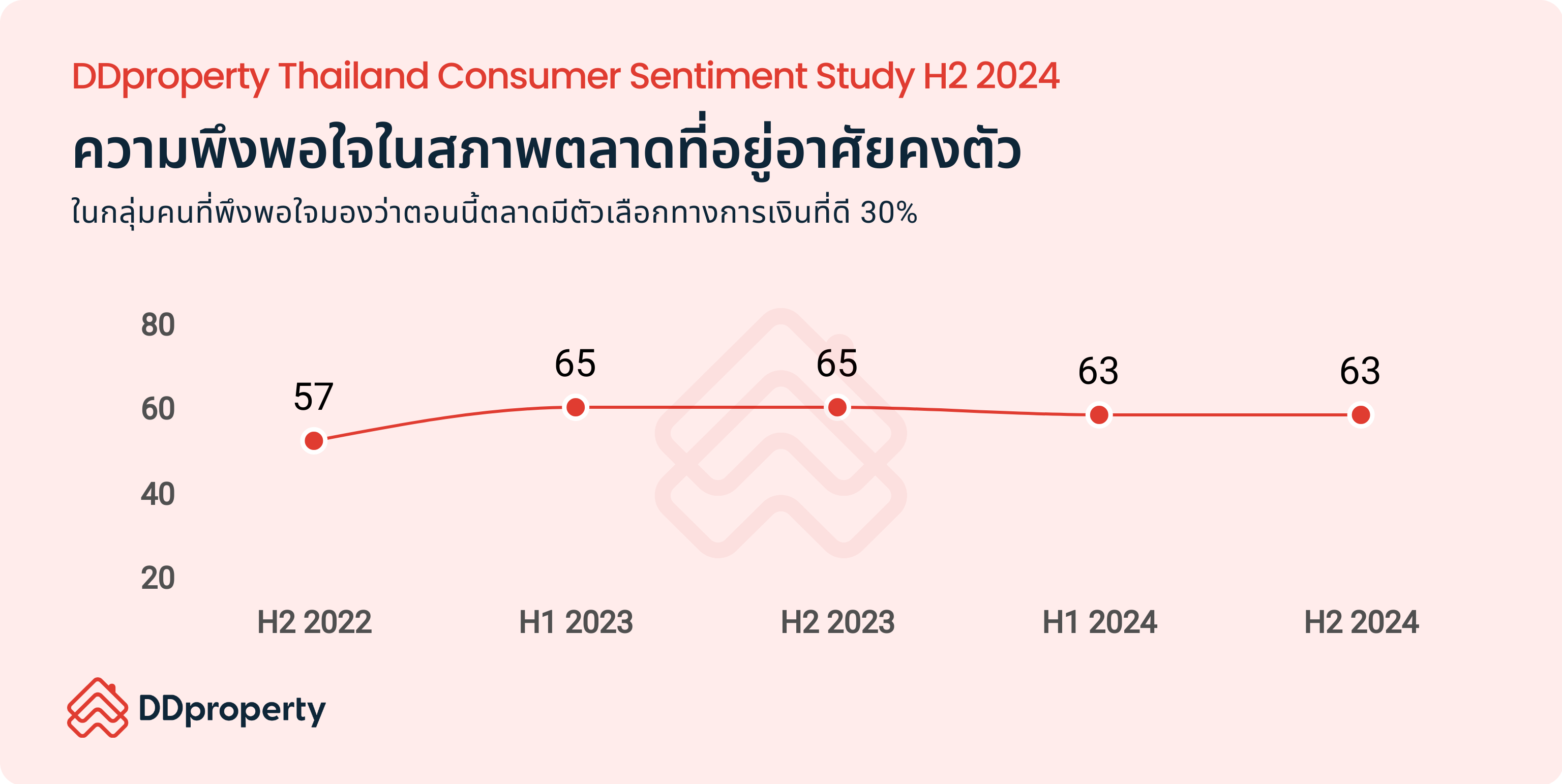
Data from the latest DDproperty Thailand Consumer Sentiment Study, conducted by DDproperty, Thailand's number one real estate platform, shows that the overall consumer confidence in the real estate sector remains in a closely monitored situation. The real estate confidence index remains stable at 48%, while satisfaction with the housing market is also stable at 63%. This reflects that the economic stimulus measures through the real estate sector introduced in April 2024 have not yet revived the real estate market as many had hoped.
However, the ability of consumers to purchase housing has increased to 61% (up from 59% in the previous round), indicating that consumers are planning their finances more carefully after facing economic challenges for a long time. This has led those who need to buy a home now to learn to adjust their spending plans and create greater financial discipline before becoming homeowners.
Additionally, the Monetary Policy Committee's (MPC) decision to maintain the policy interest rate has become a challenge affecting the financial liquidity of those planning to buy homes. Most consumers view current mortgage interest rates as high (49%) and very high (28%), with only 16% considering the rates to be appropriate. Furthermore, the proportion of consumers who believe the government is making sufficient efforts to help them buy their own homes remains stable at 13%, reflecting that the additional real estate stimulus measures introduced this year may not adequately address the burdens of homebuyers.
Watch for Housing Demand: More People Want to Buy Homes Before Government Measures End
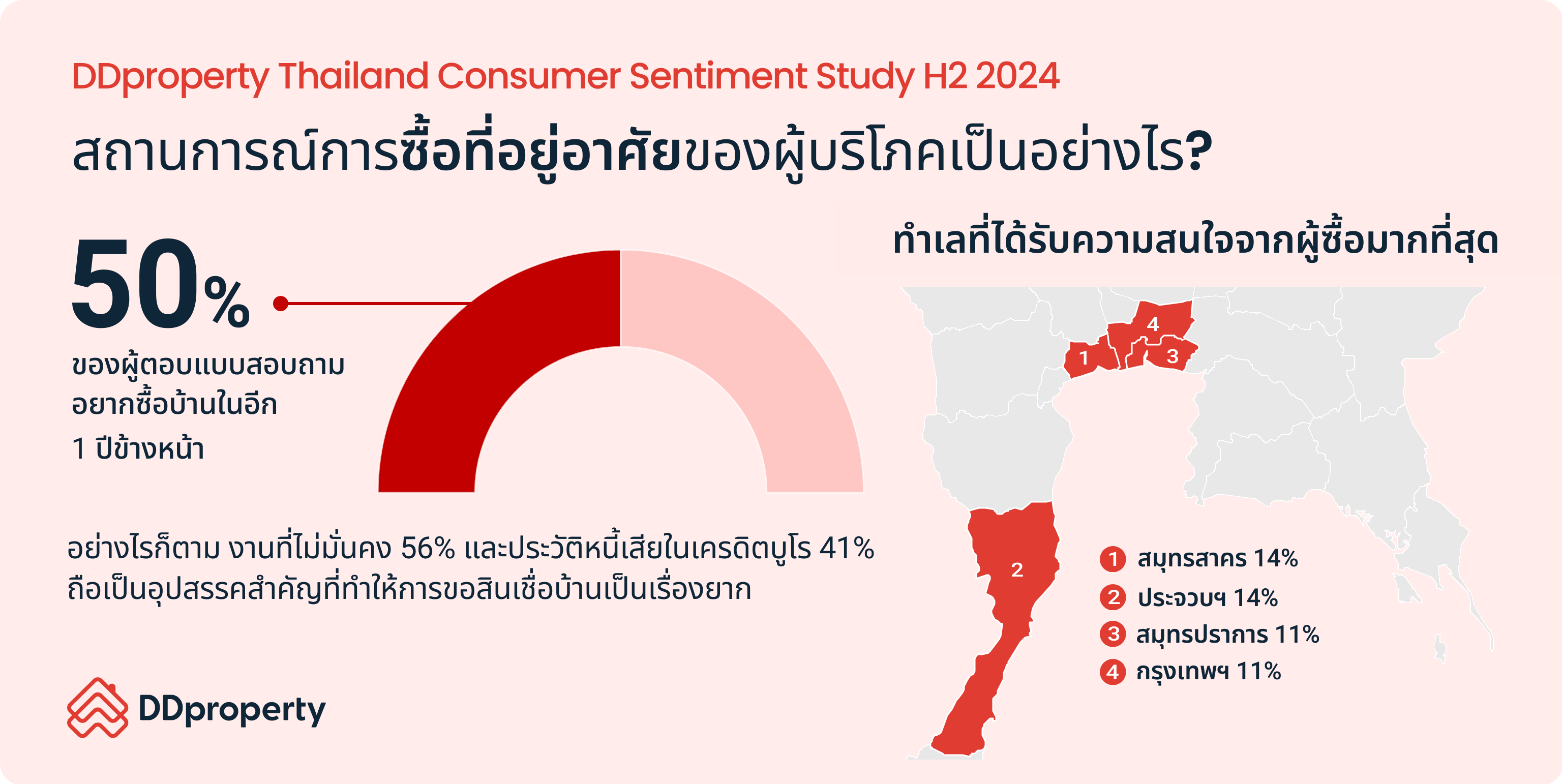
According to the latest DDproperty Thailand Consumer Sentiment Study, half of the respondents (50%) plan to buy housing in the next year, up from 44% in the previous round, indicating a positive sign that consumers still want to buy homes or condominiums soon before the measures to reduce transfer and mortgage registration fees end on December 31, 2024. The proportion of those choosing to rent has decreased to 10% (down from 14%), while 7% of consumers plan to inherit housing from their parents and continue to pay off the mortgage. Another 32% still have no plans to buy or rent any housing at this time.
- “Desire for Private Space” is a Major Factor Driving Home Purchases Among consumers wanting to buy housing, nearly half (47%) decided to purchase because they want more private space. Following that, 31% are buying to provide more space for parents/children as their families grow. This shows that the top two reasons focus on purchasing to meet the needs of residents, followed closely by buying for investment at 30%, as investing in real estate is seen as an attractive return and has ongoing demand in the market.
When considering financial readiness, most homebuyers are placing greater importance on financial planning, with 1 in 3 (33%) stating they have sufficient savings to buy their own home. Meanwhile, nearly half (48%) have saved halfway towards purchasing a home, reflecting their preparation before buying during a period of economic slowdown. Therefore, home seekers must adapt to create their own financial stability, with only 18% not having started saving at all.
- “Savings Lag Behind Home Prices” Leads People to Choose Renting At the same time, the main reason consumers choose to rent instead of buy is primarily financial. More than half (56%) report that they do not have enough savings to purchase housing, while nearly 2 in 5 (37%) choose to save instead due to high home prices, and 36% do not see the necessity or urgency to buy housing at this time. This reflects that most renters are still concerned about managing financial liquidity in an era of high economic uncertainty, thus reducing risk by avoiding home purchases and opting to rent, which better meets their financial needs and reduces expenses.
The current perspective on homeownership among the younger generation is shifting towards the Generation Rent trend, which aligns with lifestyle needs and avoids long-term financial burdens from home purchases, as well as providing greater flexibility for future relocations. Nearly 2 in 5 renters (39%) indicate they plan to rent for 2 years before purchasing housing later, while 29% are uncertain about how long they will continue renting as they need to reassess other readiness factors. Meanwhile, 5% state they intend to rent for life.
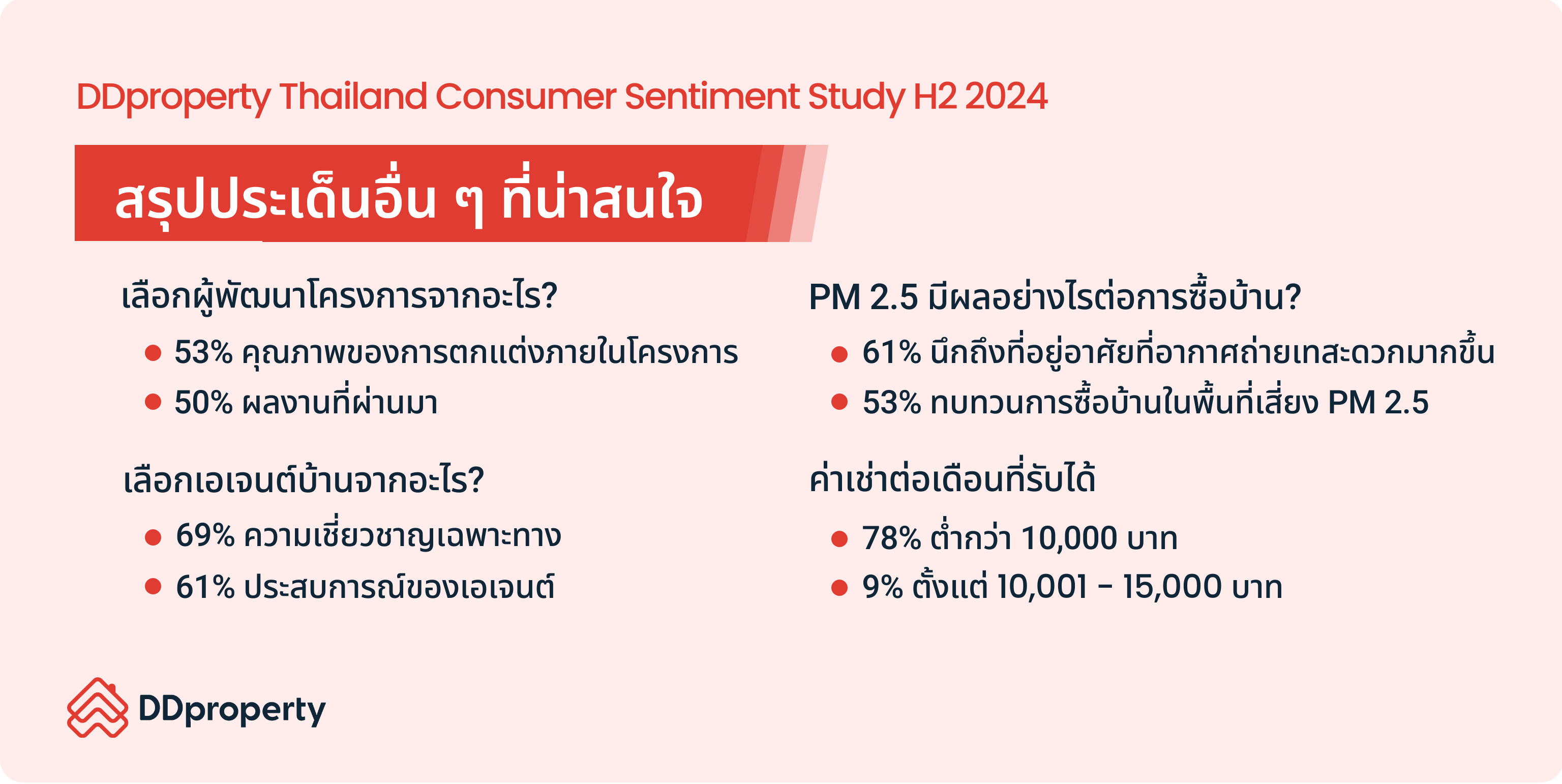
For rental prices, the most sought-after range among renters is below 5,000 baht/month, with 46% reflecting the trend of seeking affordable rental housing that meets current financial status, followed by 5,001-10,000 baht/month and 10,001-15,000 baht/month (32% and 9%, respectively).
Update on Home-Seeking Trends: The Puzzle of Dream Homes in 2024
- “Size and Location” are Key Factors When Choosing to Buy a Home Internal factors affecting consumers' decisions to buy or rent housing show that over 2 in 5 (43%) prioritize the size of the residence first. The dream home/condo must have sufficient usable space to meet the living needs and lifestyle of family members. Following that, 42% consider the average price per usable area, reflecting that value for money remains a crucial factor attracting purchase decisions, followed by amenities within the residence at 37%.
Regarding external factors influencing the decision to buy/rent housing, nearly half (48%) consider the project's location first, emphasizing the importance of choosing projects located in areas with growth potential or where the government has plans to develop infrastructure and mega-projects in the future, which will help increase the value of the residence. Following that, projects that are easily accessible by public transport and safety considerations of the project are equally important at 44%, all of which are crucial factors for long-term well-being.
- “Quality of Interior Decoration” Attracts Consumers to Choose Developers A significant factor that consumers consider when selecting a real estate developer is that more than half (53%) prioritize the quality of the project's interior decoration, as it directly reflects the quality of the product. Consumers can also assess value based on the quality of work compared to the selling price. Following that, they consider the developer's past work and various financial offers, discounts, or cashback, at 50%, which can help alleviate costs when purchasing a new home, allowing consumers to use this money for home decoration.
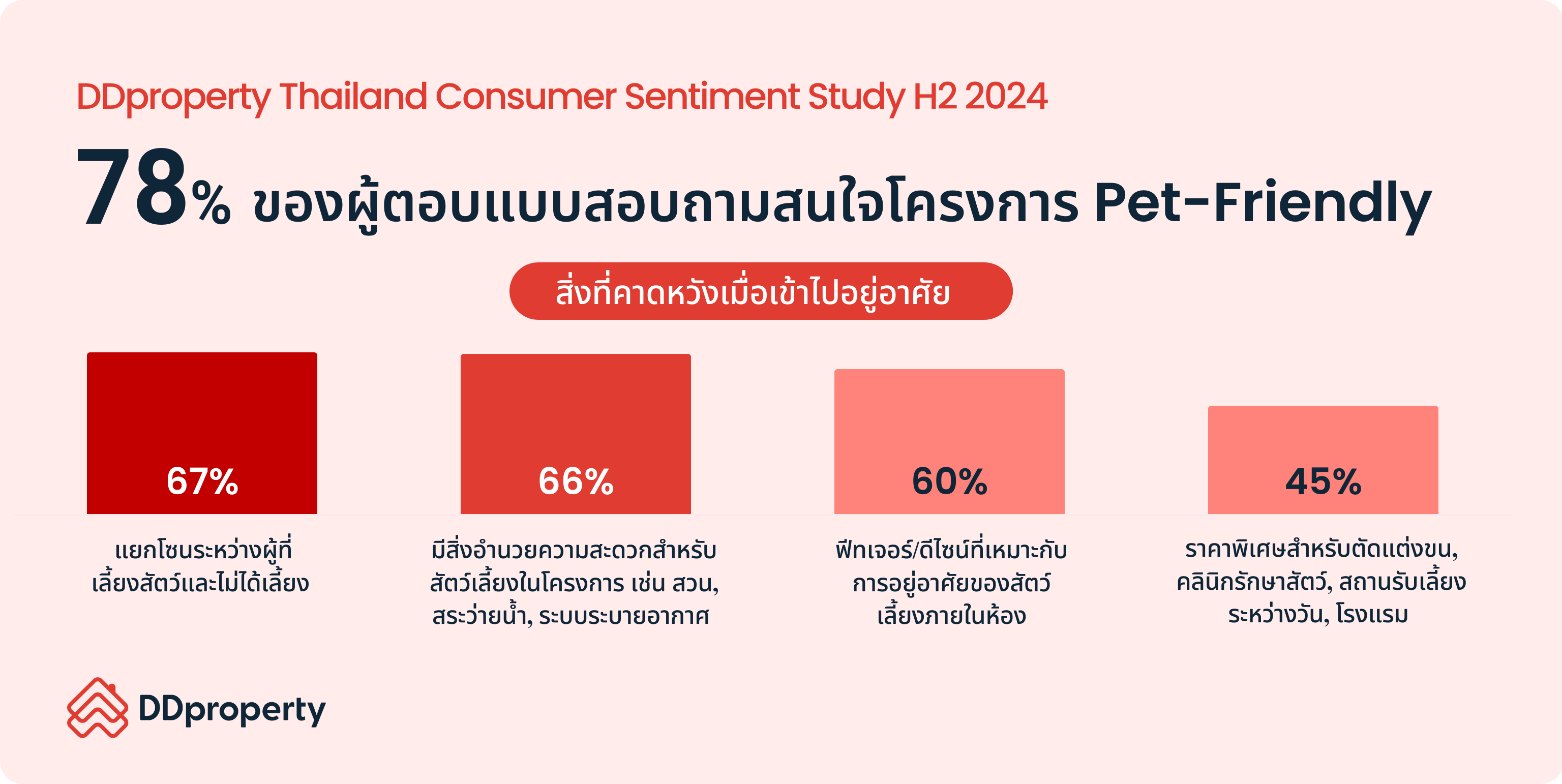
- Pet Parent Trend is Rising 78% Interested in Pet-Friendly Projects. A survey by the College of Management, Mahidol University (CMMU) reveals that 49% of Thais want to keep pets as children (Pet Parents), reflecting the growth of the pet market and opportunities to target this demographic in various businesses, including the housing market. This aligns with data from the DDproperty Thailand Consumer Sentiment Study, which found that over 3 in 4 (78%) consumers expressed interest in pet-friendly projects, with over 2 in 3 (67%) of those interested expecting clear zoning between pet owners and non-pet owners within the building. Following that, 66% expect amenities for pets, such as parks, swimming pools, and ventilation systems, while 60% expect designs that accommodate pet living, such as ventilation systems in rooms and safety-enhanced balconies.
- PM 2.5 Dust Problem Persists Thais are Looking for Homes that Help Solve This Issue. The PM 2.5 dust problem remains a concern for home seekers, as this risk inevitably affects health. 61% of consumers choose to consider only projects with good air conditioning and ventilation to help mitigate the severity of PM 2.5 dust. Following that, 53% indicate they will reconsider their housing purchase plans in high-risk areas, while 37% will consider purchasing homes/condos with functions or features that help address this issue.
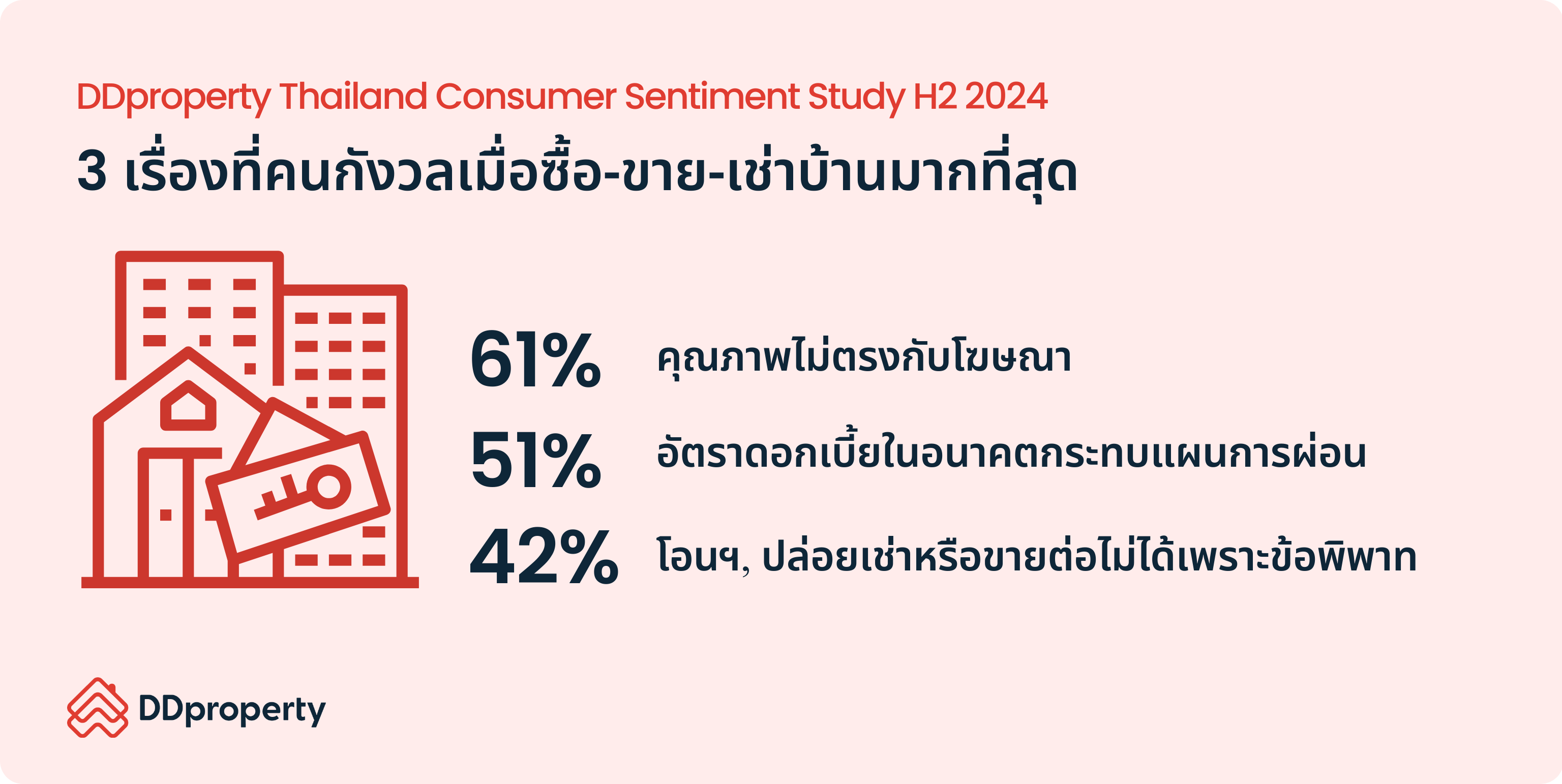
- “House Not as Advertised” is the Top Concern for Home Buyers Purchasing housing is a significant decision that comes with challenges, as once bought, issues cannot be easily changed like regular products. It is evident from consumer concerns when buying, selling, or renting housing that over 3 in 5 (61%) worry that the quality of the housing received will not match what was advertised, particularly among those with medium to high incomes. Following that, 51% are concerned that payment plans may be affected by fluctuating or rising interest rates in the future, which could lead to financial issues. Meanwhile, 42% worry that purchased projects may have disputes with various agencies, preventing them from selling, transferring ownership, or renting.
How Ready are Millennials and Gen Z to Buy Homes Right Now?
Millennials (Gen Y) and Gen Z consumers are at the stage of starting families and planning to buy housing, making them important to the real estate sector. However, only 37% of consumers plan to move out of their parents' homes within the next year, while over 3 in 5 (63%) indicate they have no plans to move out soon, citing reasons such as wanting to care for their parents closely (43%), intending to inherit their parents' homes (28%), and not having sufficient savings to buy or rent their own housing at this time (27%). This reflects the financial challenges that prevent the younger generation from having enough purchasing power to own housing, which is a crucial factor for human beings.
Despite the challenges posed by the economic situation affecting the home/condo buying plans of the younger generation, the desire to buy remains. Millennials and Gen Z indicate that if given the choice between buying or renting housing, the majority prefer to buy, with 82% wanting to purchase and only 18% interested in renting.
In the next year, Millennials and Gen Z consumers plan to allocate their finances towards family spending at 56%, followed by saving for emergency funds at 54% to prepare for uncertain future situations, and paying off various debts at 27%, with only 21% planning to save money to buy housing. This aligns with data from the National Economic and Social Development Council's (NESDC) report on Thai social conditions for the first quarter of 2024, which reveals that the increasing aging population contrasts with the declining working-age population in Thailand, resulting in the "Sandwich Generation"—those in the middle who must care for both aging parents and their own children—facing greater responsibilities and financial challenges. Coupled with a fragile economy, this makes it harder for the younger generation to establish themselves, leading to homeownership potentially not being a top priority anymore.
Hoping for Government Measures to Facilitate Easier Homeownership
It cannot be denied that the long-standing economic slowdown and high-interest rates have become significant challenges preventing the real estate market from growing as anticipated and inevitably affecting those planning to buy homes/condos. One in three consumers (33%) report that they will delay their housing purchases due to savings being impacted by the economy. Additionally, 22% plan to buy cheaper housing instead, and another 22% have no plans to buy housing in the near future to reduce unnecessary debt burdens.
Moreover, financial liquidity is another obstacle making dream homes not easy to achieve. More than half of consumers (56%) report that significant obstacles to obtaining housing loans stem from unstable income and employment, followed by poor financial history (41%) and unfavorable debt-to-income ratios (30%). It is evident that the top three obstacles are all related to consumers' financial liquidity, which directly impacts banks' loan approval considerations, resulting in an increasing loan rejection rate. This aligns with data from the Bank of Thailand (BOT), which indicates that the rejection rate has risen among those earning over 30,000 baht per month, compared to those earning below 30,000 baht.
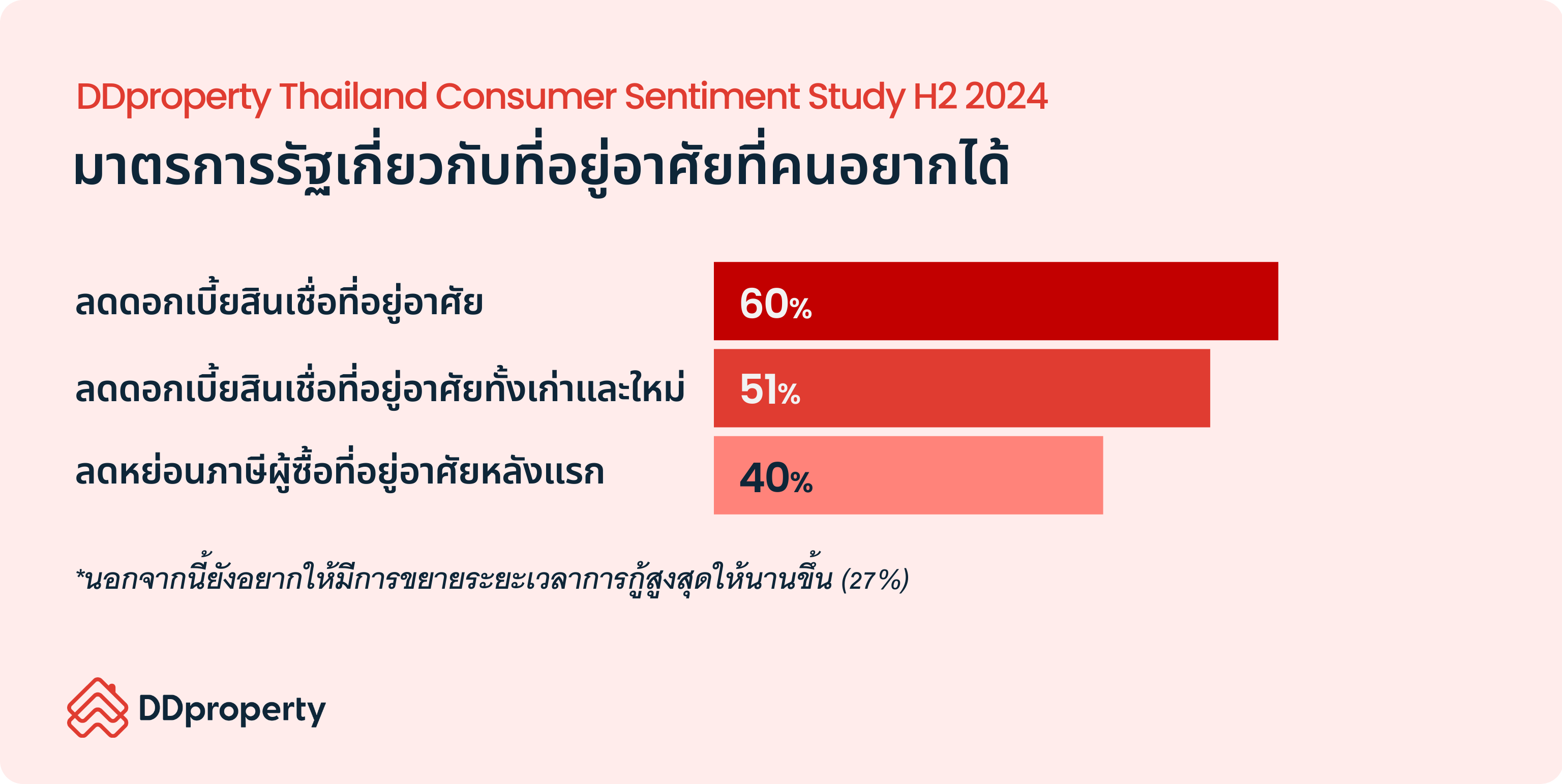
Many parties still hope for positive factors from government measures to stimulate growth in the real estate market alongside economic stimulation. Currently, 3 in 5 (60%) consumers want measures to further reduce mortgage interest rates, followed by 51% wanting measures to lower interest rates on both existing and new loans. It is clear that the top two priorities focus on measures that help alleviate interest burdens, as they directly enhance the financial liquidity of homebuyers. The third priority is tax relief measures for first-time homebuyers at 40%, which would attract real demand buyers to easily decide to own housing, aligning with the government's policy to ensure all Thais have housing. These measures will be another crucial mechanism to drive the real estate sector and related businesses back to vibrancy.
Note: The DDproperty Thailand Consumer Sentiment Study is a biannual survey of consumer opinions regarding the housing market in Thailand, aimed at understanding the perspectives and needs of consumers, investors, and agents on various issues related to the housing market, including buying, selling, and renting behaviors and trends, conducted through an online questionnaire among a sample of 1,050 individuals aged 22-69.
Read and study the latest consumer sentiment survey regarding the housing market in Thailand at DDproperty Thailand Consumer Sentiment Study.